Government publishes H2Boost report on biohydrogen production from waste
The Department for Energy Security and Net Zero (DESNZ) has published the final report detailing the H2Boost project, an innovative biorefinery aimed at producing sustainable hydrogen from waste and advancing a promising carbon-negative solution to support the UK's climate goals.
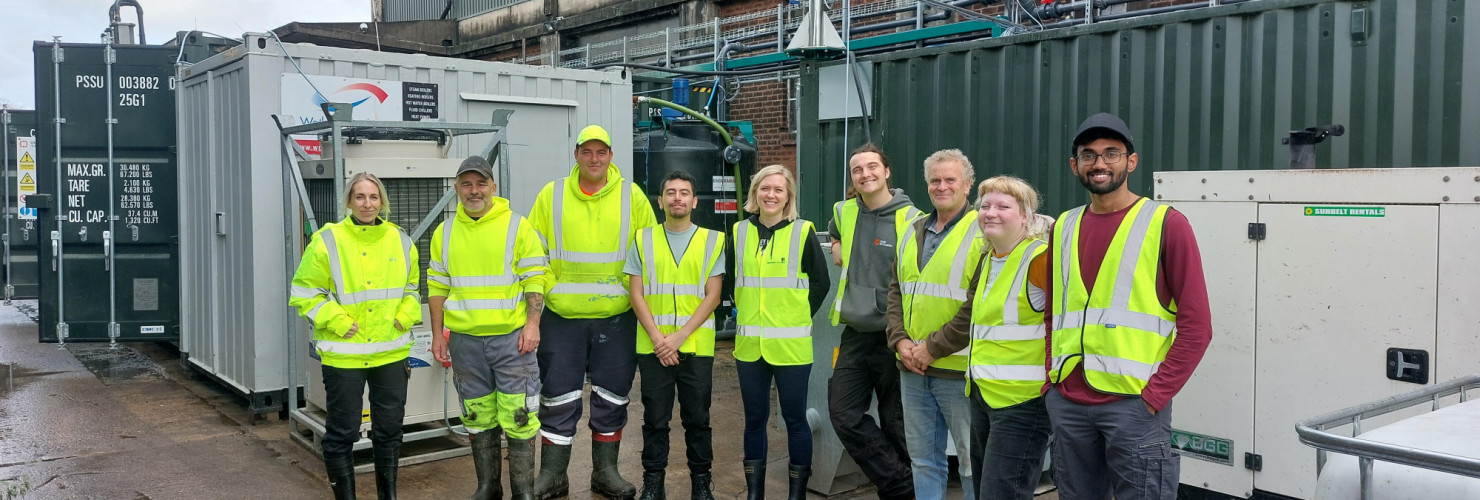
Led by The Biorenewables Development Centre Limited (BDC) and supported by nine partner organisations, the project culminated in a first demonstration of a system at small pilot scale. The demonstration successfully produced biohydrogen from overlooked waste streams while testing carbon capture technologies that could form part of an integrated closed-loop system.
H2Boost secured c£5 million in funding under the Hydrogen Bioenergy with Carbon Capture and Storage (BECCS) Innovation Programme. This effort is a core part of the government's wider Net Zero Innovation Portfolio (NZIP), which is designed to identify cutting-edge clean energy technologies. The project's objectives support the UK's ambition of reaching Net Zero by 2050, which will be achieved in part through low-carbon hydrogen-based technologies projected to provide up to 35% of energy requirements.
Advancing hydrogen production from waste
A key achievement of H2Boost was demonstrating hydrogen production from a range of waste materials at a level that could be commercially viable with further development. The project successfully converted multiple low-value, wet waste streams, such as food and paper processing waste, into hydrogen, offering a sustainable alternative to fossil-based fuels and a high-value use for discarded materials that might ordinarily go to landfill.
The project concurrently explored two biological carbon capture technologies—algae developed by the University of Leeds and cyanobacteria developed by CyanoCapture Ltd—which could be integrated with hydrogen production to create a carbon-neutral system. Qube Renewables built the biohydrogen production system, with Aardvark EM handling planning and regulatory compliance, and Ramboll providing engineering project management and safety oversight. The system operated at The Maltings Organic Treatment Ltd, a food waste processing facility in South Milford, North Yorkshire, with AB Agri providing analytical support and commercial guidance.
The set-up integrated advanced technologies to convert organic waste streams to biohydrogen through dark fermentation, combined with downstream processing of by-products for biomethane production and carbon capture. This multi-step process generated important data proving that, with further investment and development, this technology could become both financially viable and environmentally sustainable.
Penny Cunningham, Programme Operations Manager at the BDC, emphasised the scale of the achievement:
The successful demonstration of biohydrogen production from organic waste streams represents a significant technical breakthrough for the H2Boost project. Areas for refinement and optimisation were identified and the project as a whole confirmed that this novel approach holds great promise for large scale sustainable energy solutions in the future.
The carbon-negative proof
The comprehensive final report provides in-depth data that confirms the system's potential in the bioeconomy. A Life Cycle Analysis (LCA), delivered by NNFCC (now Alder Bioinsights) and CM90 Ltd, proved that by capturing emissions directly from the process, the optimised system would move beyond simply being low carbon to being carbon negative. Furthermore, the optimised closed-loop process would ensure full utilisation of materials as the system also includes a valuable secondary energy output, which would significantly boost its economic appeal and energy flexibility.
The H2Boost project produced data to develop the commercialisation strategy needed to increase the technology readiness level of the integrated system. The consortium is now addressing the modifications required which were identified during the demonstration phase operations. These challenges include opportunities such as generation of a second product stream in the form of volatile fatty acids, valuable platform chemicals that are produced alongside hydrogen.
The BDC-led consortium brings together leading academic research and industry expertise. Project partners included the University of Leeds, Qube Renewables, Aardvark EM, Cyanocapture Ltd, The Maltings Organic Treatment Ltd, AB Agri, NNFCC, Ramboll, and CM90 Ltd.
The H2Boost final report can be read here.
Watch our video and read more about the project here.
For further information please contact Penny Cunningham: penny.cunningham@york.ac.uk
Let's work together
We have worked on 1,500 bio-based projects to date
We have several ways to work with us, including business advisory programmes and self-funded commercial options. We even have the option for you to hire our state-of-the-art laboratory equipment and office space.